Interesting things to know about Ojude Oba Festival
The Ojude Oba Festival is one of Nigeria’s culturally significant indigenous celebrations, deeply rooted in the traditions of the Ijebu people.
It is held annually in Ijebu-Ode, Ogun State, and takes place at the Awujale Pavilion, now under the leadership of the Awujale of Ijebuland, Oba Sikiru Adetona.
The festival is held on the third day after the Eid-el-Kabir (Ileya) festival and is widely known for its opulence, display of Yoruba heritage, and vibrant expressions of unity and community pride.
Originally, Ojude Oba translated as “The King’s Forecourt”, was a modest gathering of Muslim faithful who came to pay homage to the reigning Awujale.
It has since grown into a grand event that welcomes participants of all faiths and backgrounds.
The roots of the festival can be traced back to the 19th century when Islam began spreading among the Ijebu people.
Early Muslim converts, led by Imam Tunwatoba, organised a visit to thank Awujale Ademuyewo Afidipotemole for allowing them to practice their religion freely.
The king’s tolerant leadership was said to have encouraged the growth of Islam across Ijebu communities during that era.
Before the emergence of Ojude Oba, the Odeda festival was widely celebrated by traditional religious adherents in Ijebuland.
As Islam gained prominence, some prominent Ijebu figures such as Chief Kuku, who had converted, could no longer participate in Odeda.
This shift led to the creation of Ita Oba, a festival observed after the Eid celebration, which was eventually renamed Ojude Oba.
Today, the festival is a vibrant showcase of Ijebu culture and Yoruba traditions.
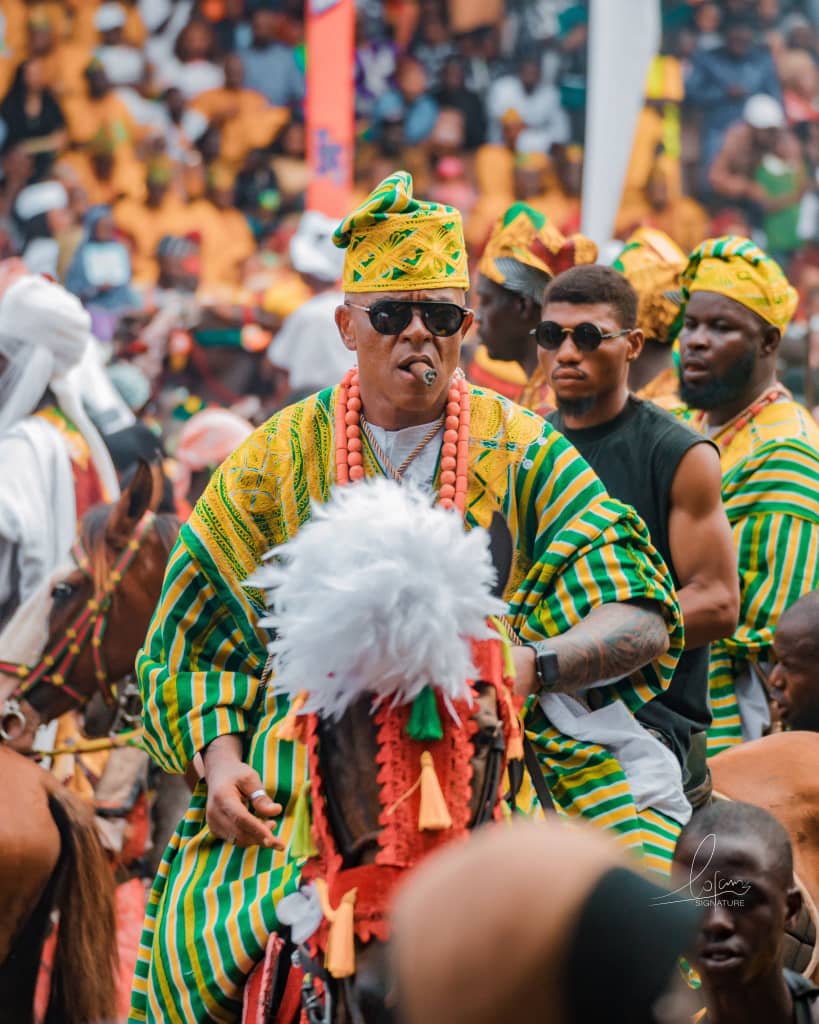
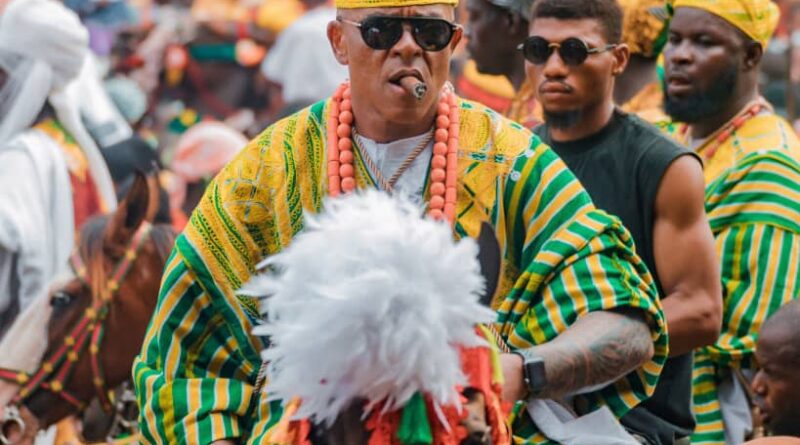
Thousands gather to witness the elegantly dressed attendees in traditional outfits such as Agbada, Iro and Buba, made from exquisite fabrics like Aso Oke, Sanyan, and Adire.
Horse riding, musical performances, cultural dances, and intermittent gun salutes are all part of the festivities, reflecting the community’s pride in its heritage.
The parade of age-grade groups, known as ‘Regbe Regbe’, is one of the festival’s most engaging spectacles.
Each group appears in coordinated attire and takes turns to greet the Awujale with dances, prayers, and the presentation of gifts.
These social groups, with distinct names such as Obafuwaji, Bobagbimo, Bobakeye, Gbobalaye, and Gbobaniyi, include men and women from various professions and social classes, all of Ijebu descent.
They often attempt to outshine each other through their elaborate costumes and performances, motivated in part by the chance to win cash prizes from sponsors.
As of 2024, there are over 90 age-grade groups actively participating, drawing more than 100,000 attendees, including a wide international following on social media.
The ornately dressed horse riders, representing the distinguished Balogun families such as Balogun Kuku, Balogun Odunuga, Balogun Alausa, Balogun Alatishe, Balogun Adesoye, and others, also remain a central feature of the event.